Luxury Hotels as a Learning Journey: What I Learned

Reading time: 10 minutes
When I first walked into the lobby of the Bayerischer Hof in Munich, I still thought the whole thing was a pure waste. $700 a night for a room where I'd only be sleeping? Today, three years later, I know that my luxury hotel experiences shaped me more than any seminar or self-help book. The upscale hotels were my practical university for self-confidence, etiquette, and financial independence.
I'm Lena, and through lifestyle dating I discovered a way of life that was completely foreign to me before. Instead of withering away in an office 40 hours a week, I accompany inspiring people to business events, galas, and trips. The premium accommodations where we stay along the way have taught me practical lessons I couldn't have gotten anywhere else.
Lesson 1: How I learned to recognize quality
At the Brenners Park-Hotel & Spa in Baden-Baden, I understood for the first time what real quality means. The 1,000-thread-count Egyptian cotton bedding didn't just feel luxurious, it showed me a standard I hadn't known before. According to a 2023 GfK study, 68 percent of German consumers say they have trouble telling high-quality products from inferior ones.
In exclusive resorts, I learned to pay attention to detail. The way the staff at The Ritz-Carlton in Berlin knew my name without my ever having told them. The way the towels at the Hotel Adlon weren't just soft, but were replaced after exactly 30 minutes once I'd used them. That attention to detail sharpened my own eye for quality, from clothing to cosmetics to investment decisions.
What you can learn in luxury hotels goes far beyond material things. I watched how regular guests at the restaurant of the Louis C. Jacob in Hamburg spoke with the sommelier, how they chose wine, how they carried themselves. Not arrogant, not condescending, but with a calm matter-of-factness. These observations were pure gold for my personal growth through upscale accommodations.
Cultural education and worldliness
At the Aman Venice, a converted palazzo on the Grand Canal, I stood in front of a genuine Tiepolo fresco. The concierge casually told me the history of the 16th-century building. Suddenly art history was no longer a dry school subject but living reality. According to the European Travel Commission Report 2024, 47 percent of luxury travelers cite cultural education as the main motive for their stays.
In the lounges and restaurants of these hotels, I met people from all over the world. Over breakfast at the Park Hyatt Vienna, an investor from Singapore explained the basics of the Asian real estate market to me. In the spa at Schloss Elmau, a gallery owner from Paris shared her view of modern art. These relaxed conversations broadened my horizons more than any community college course.
The education I got from premium hotel stays happened on the side, without pressure. I learned by listening, observing, and asking questions. Nobody lectured me, but everyone gladly shared their knowledge when I showed genuine interest.
Self-confidence through new experiences
My first time in a luxury hotel was intimidating. I didn't know whether I should tip the concierge, how much was appropriate, or whether I could walk to the spa in a bathrobe. Today I move through these spaces as naturally as I used to move through my old shared apartment's kitchen. That confidence didn't come overnight, but through repetition and conscious learning.
At the Vier Jahreszeiten in Hamburg, I learned that luxury hotels and personal growth are directly connected. The first time I enjoyed an eight-course tasting menu at the hotel's two-Michelin-star restaurant, the Haerlin, I was nervous. Which fork for which course? How do I react when the sommelier makes a wine recommendation? Today I know that nobody judges you as long as you're polite and interested. That realization strengthened my self-confidence in every area of life.
My experiences with premium accommodations showed me that I can grow into any situation. What seems foreign at first becomes familiar with practice. That lesson has helped me be braver in other areas, too, such as building my network outside of traditional career structures.
Financial literacy through observation
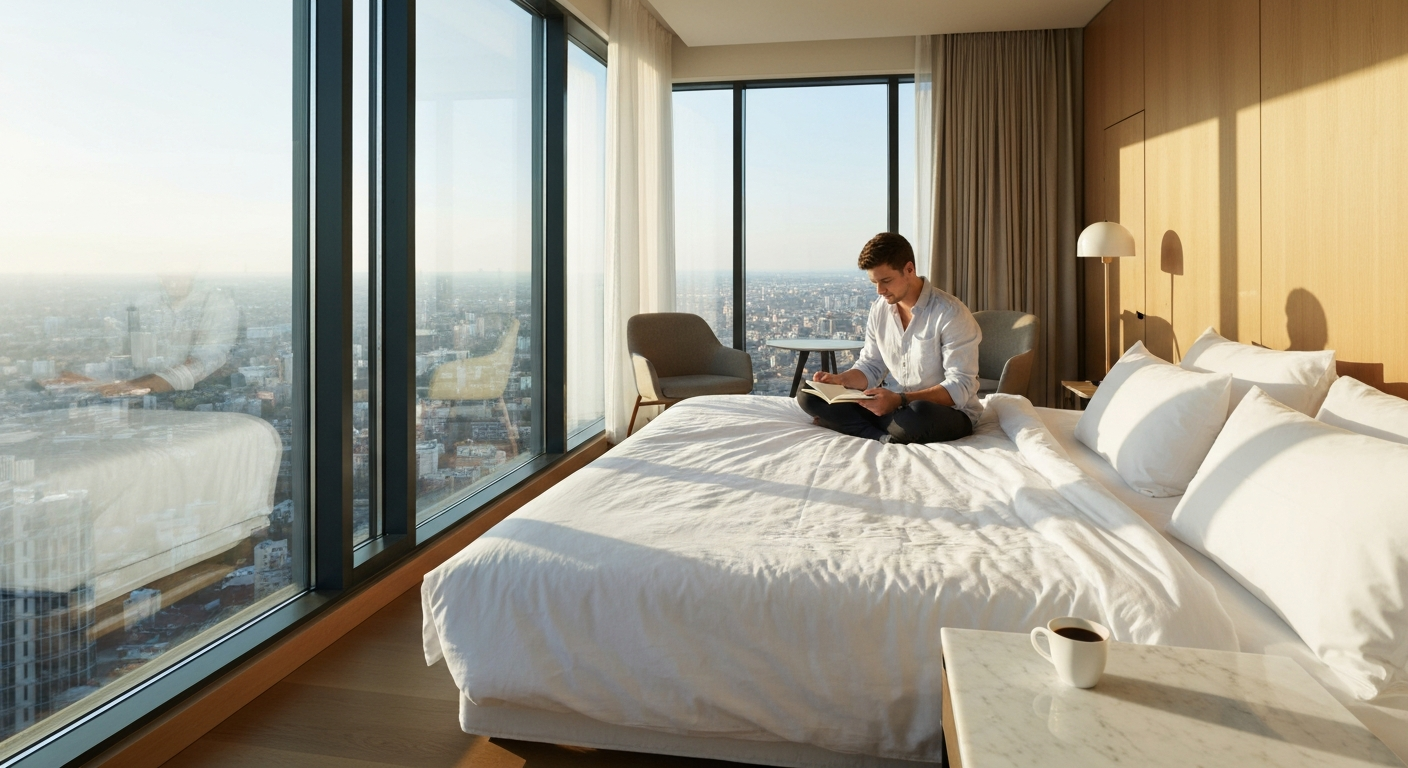
In luxury hotels, I watched how wealthy people handle money. Surprise: most of them were more frugal than I'd expected. At the Hotel de Rome in Berlin, I saw a successful entrepreneur put together his own breakfast from the buffet instead of ordering à la carte in the restaurant. He later explained to me that the most expensive option isn't always the best, and that what counts is making a conscious choice.
These observations inspired me to think about my own finances. I started reading books about building wealth and investing small amounts. The conversations in the clubs and lounges were more practical than any finance webinar. People shared their mistakes, their successes, their strategies, and I got to benefit from them.
According to a 2024 Statista Germany analysis, only 32 percent of people under 35 have basic financial knowledge. In my old office job, I belonged to that majority. Through my luxury hotel experiences and the contacts that came with them, that changed fundamentally.
Etiquette and social skills
What I learned about travel etiquette as a companion deepened in the upscale hotels. I learned that a polished appearance isn't superficial but expresses respect. That showing up on time for dinner isn't a small thing but shows appreciation. That the way you treat service staff says more about a person than any statement.
At the Hotel Atlantik Kempinski Hamburg, I watched a CEO personally greet everyone at the table during a business dinner, including the waiters. His behavior showed me that true greatness shows in how you treat everyone, not just those at your own level. That lesson still shapes my behavior today.
The practical lessons in travel etiquette went beyond table manners. I learned small talk that isn't trivial but creates real connections. I learned when silence is more appropriate than talking. These social skills are valuable in every area of life, whether networking, relationships, or everyday situations.
Health and self-care redefined
The spa areas of the luxury hotels showed me a new approach to health. At Lanserhof Tegernsee, a medical wellness resort, I experienced for the first time that health doesn't just mean the absence of illness but actively optimizing your well-being. The programs there combined modern diagnostics with holistic approaches.
At the Grand Resort Bad Ragaz in Switzerland, I got to know hydrotherapy, and at the SHA Wellness Clinic in Spain, macrobiotics. These experiences opened my eyes to preventive approaches that play hardly any role in the regular healthcare system. According to the European Health & Spa Market Report 2023, wellness tourism in Europe is growing 12.8 percent a year because more and more people are taking preventive health seriously.
I integrated what I learned there into my daily life. Not everyone needs a $3,000 detox program, but the principles can be put into practice on a small budget, too. Regular exercise, mindful eating, enough sleep – simple but effective.
Practical lessons for everyday life
My luxury hotel experiences gave me concrete skills that I use every day:
- Organization and planning: In premium accommodations, everything runs on schedule. I carried that efficiency over into my daily life, from finances to appointments to projects.
- Aesthetics and design: The thoughtful design of the rooms inspired me to furnish my own apartment more consciously. Fewer but better things create more quality of life.
- Communication: The way staff at upscale hotels communicate – clear, friendly, solution-oriented – shapes my own communication today.
- Problem solving: In exclusive resorts, there's a solution for every problem. I've adopted that attitude: instead of complaining, I look for solutions.
These practical skills are part of my personal growth through upscale accommodations. They're measurable, concrete, and immediately applicable in everyday life. Not abstract self-improvement, but hands-on skills.
Networking in a relaxed atmosphere

The most valuable contacts came not from formal events but from relaxed moments. By the pool at the Hotel Lärchenhof in Seefeld, I met an entrepreneur who became an unofficial mentor. In a yoga class at the Lanserhof, I connected with women who had taken similar paths in life.
What's special: in luxury hotels, people are more relaxed, more open, less tied to their professional roles. A CEO is first and foremost a person there, not a function. That atmosphere allows for authentic encounters that are rare in traditional business settings.
The network I built this way is more diverse and more durable than any LinkedIn profile. It's based on real encounters, shared experiences, and mutual respect. These contacts have opened doors that would otherwise have stayed closed.
Why luxury stays pay off in the long run
The investment in upscale hotels may seem expensive in the short term. In the long run, it was the best investment of all for me. The experiences, contacts, and skills I gained there still pay off today. They've raised my quality of life, increased my income, and opened up possibilities that were unthinkable before.
Of course, not everyone has to stay in five-star hotels. But when the opportunity arises, you should take it. Through platforms like MySugardaddy, women can gain access to this world without having the necessary budget themselves. Lifestyle dating opens doors that would otherwise stay shut.
What matters is the right attitude: not consuming, but learning. Not passively enjoying, but actively observing. Luxury hotels and personal growth only go hand in hand if you look closely and recognize the lessons.
Frequently asked questions about luxury hotel experiences
What can you concretely learn in luxury hotels?
In luxury hotels, you learn practical skills like etiquette, communication, and an eye for quality. Through observation and conversations with other guests, you gain knowledge about finance, art, culture, and business. The relaxed atmosphere makes networking on an equal footing possible. A stay also builds self-confidence and the ability to move comfortably in upscale social settings.
How do premium accommodations differ from regular hotels?
Premium accommodations offer not just better amenities but a holistic experience. The service is personalized, and staff know guest preferences. The quality of materials, food, and services is significantly higher. More importantly, the guests are often successful, interesting people, which creates unique networking opportunities. According to 2024 hospitality statistics, five-star hotels invest on average 140 percent more in staff training than three-star hotels, which explains the quality of service.
Are luxury stays worth it on a small budget?
Even on a limited budget, you can benefit from upscale hotels. Many offer significantly reduced rates off-season. Day-spa offers give you access to wellness areas without an overnight stay. Afternoon tea or a visit to the bar at a luxury hotel is affordable and gives you a feel for the atmosphere. Through lifestyle dating on platforms like MySugardaddy, women can gain access to this world without having to pay themselves. What matters is taking advantage of opportunities and learning consciously.
What personal growth do upscale accommodations make possible?
Upscale accommodations foster self-confidence through new experiences in unfamiliar settings. They train social skills through observation and interaction with worldly people. Stays broaden your cultural horizons and eye for quality. Financial literacy comes from conversations with successful guests. The experiences show that you can grow into any situation, which gives you the courage to make changes in every area of life.
How do you make the most of a luxury hotel stay for personal growth?
You make the most of a stay through active participation instead of passive consumption. Consciously observe how other guests behave, how they communicate, how they make decisions. Use conversations at breakfast or at the bar for real exchange. Ask staff for recommendations and background knowledge. Try new experiences like spa treatments or culinary specialties. After the stay, reflect on which lessons you can take with you and integrate into your daily life.
My personal conclusion
My luxury hotel experiences changed my life fundamentally. They showed me a world that would otherwise have stayed closed to me. It wasn't the material comforts that were most valuable, but the people I met, the skills I acquired, and the self-confidence I developed.
Today I move through spaces that used to be foreign to me with a naturalness I can hardly believe myself. I've learned that luxury isn't a waste but a form of education if you use it right. The education from premium hotel stays was more practical and lasting than any theoretical seminar.
If you have the chance, take it. Be curious, be open, be willing to learn. The lessons you can learn in upscale hotels will stay with you for a lifetime. They made me the person I am today, and I'm grateful for every single experience along the way.