Horseback Riding as a Hobby: My Path to Financial Freedom

Reading time: 8 minutes
When I first looked at my barn in Leesburg, Virginia, as a potential source of income four years ago, my coworker at the time laughed at me. Today I earn more from riding and horse training than I did in my old 9-to-5 marketing job. Riding hobby, financial freedom – to many that sounds like daydreaming, but it really works. I'll show you how I built a sustainable income from my passion and which concrete steps can help you achieve the same.
Equestrian sport is considered expensive, time-consuming, and financially unprofitable. That's true if you only pour money in. But there are concrete ways to earn money with riding and reach financial independence along the way. My monthly net income from riding lessons, training rides, and horse boarding is now $3,500 – not bad for something that was once just my Sunday hobby.
Why I monetized my riding hobby
In 2019, I was sitting in my office in downtown Washington, D.C., feeling completely burned out. The total exhaustion after work left me no energy for the barn. At the same time, my horse Luna cost me about $750 a month, including board, feed, farrier, and vet. According to a 2023 Statista survey, horse owners in Germany spend an average of 745 euros a month on their animal – and rising.
My turning point came when a barn friend asked whether I could give her daughter riding lessons. I charged $40 an hour, a fair price for private lessons in the area. After three months I already had five regular students and was earning $800 a month on the side. That completely covered Luna's costs. Suddenly it dawned on me: I could turn my riding hobby into a profession and reach financial freedom along the way.
How I managed to earn money with riding
The leap from hobby to income required a plan. I didn't just quit and hope it would all work out. Instead, I built up a solid side income over 18 months before reducing my main job. I recommend this strategy to anyone who wants to reach financial freedom through equestrian sport.
Giving riding lessons as the first source of income
Private riding lessons were my entry point. There are various instructor certifications, from basic qualifications to advanced levels. In 2020 I earned my instructor certification through the Certified Horsemanship Association, which cost about $2,000 for the two-week intensive course. With that qualification, I was able to raise my hourly rate to $50.
Concretely, my weekly schedule looked like this: four lessons each on Saturday and Sunday, plus two evenings during the week with two hours each. That was 16 hours a week, or $800 weekly, or about $3,200 a month. About 15 percent of that went to taxes and insurance, but I still netted more than in my old job.
Training rides and horse training as extra income
Training rides mean training and schooling other people's horses. I started with a young horse from my barn whose owner had no time to start it under saddle. For six months of training, I charged $700 a month, including five training sessions a week. The horse was already at the barn anyway, so I had no additional costs.
After that success, word got around that I work reliably and competently. Within a year, I had three horses in training at the same time, which meant an additional $2,100 a month. Important: I signed a written contract for each training arrangement and had professional liability insurance, which cost me $350 a year.
Horse boarding and barn brokerage
When I took over a larger barn with eight stalls in Middleburg, Virginia, in 2022, another source of income opened up. I rented out three stalls to boarders for $550 a month each, which brought me $1,650 in rental income. About $1,000 of that went to the lease, electricity, water, and maintenance, but $650 in profit was a solid buffer.
Strategies for financial freedom through equestrian sport
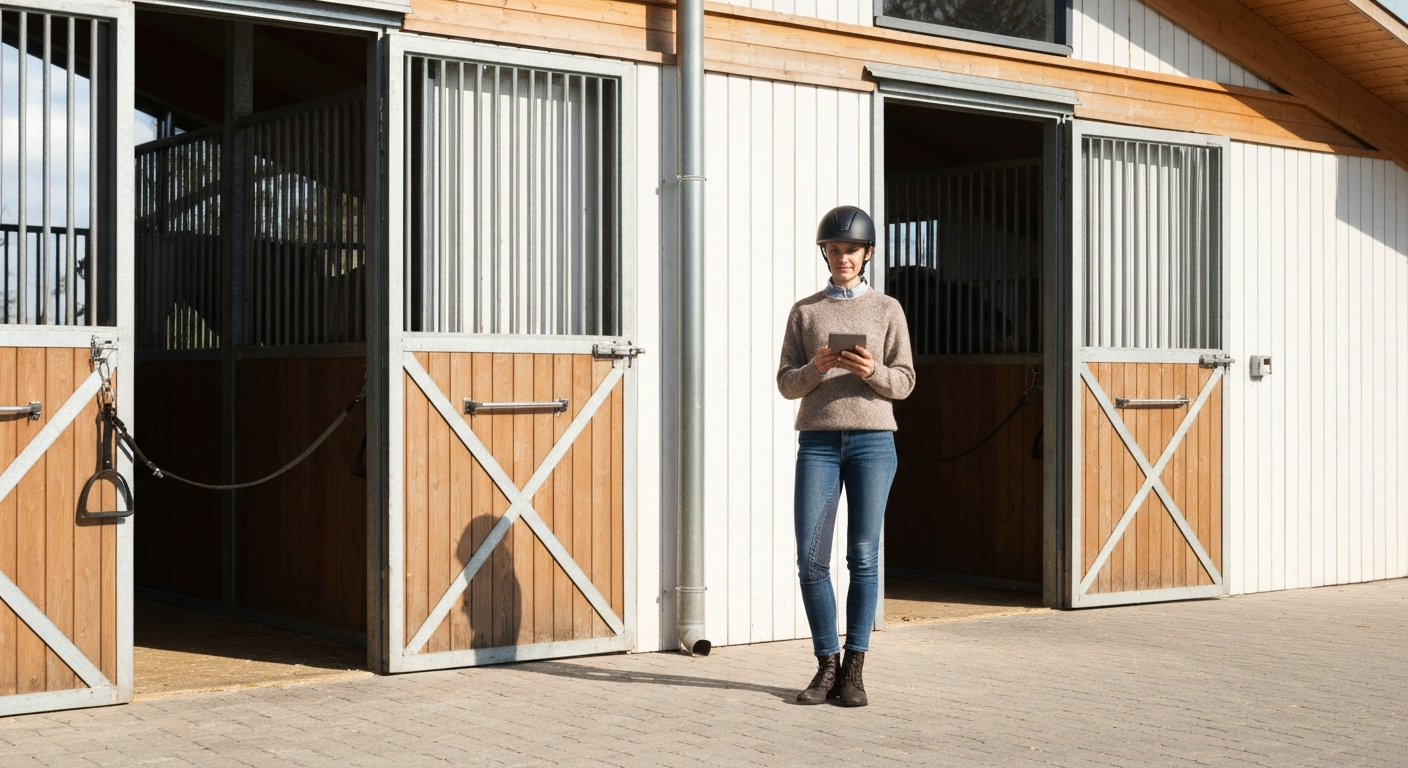
Riding and earning money doesn't happen by chance. It takes structure, professionalism, and business thinking. These three factors helped me grow my equestrian side income into a full-time income.
Combining multiple income streams
Never rely on just one source of income. I combine riding lessons, training rides, stall rentals, and since 2023 also online coaching for recreational riders. The online coaching brings me an additional $450 a month or so through the platform Teachable. That way I'm not dependent on a single activity and have financial security.
Professional presence and marketing
A simple website, an Instagram account with regular posts, and word of mouth are your best friends. I built my website with WordPress and the Astra theme, costing about $130 a year for hosting and domain. On Instagram, I post three times a week: training videos, my students' success stories, and riding tips. By now I have 2,400 followers, about 15 percent of whom became paying clients.
Continuing education
The riding industry keeps evolving. I invest about $900 a year in further training, whether it's a course in biomechanical riding, a seminar on horse health, or a marketing workshop. These investments pay off directly because I can always offer my clients up-to-date knowledge and justify higher prices.
Reality check: the challenges
I want to be honest: the path wasn't always easy. There are weeks when I work seven days straight because horses don't know holidays. In the winter of 2022, I had three weeks of daily temperatures around 14 degrees Fahrenheit, frozen water lines, and lessons still had to go on. The work is physically demanding, and I've already had two injuries, once a bruised thigh from a kick, once a pulled muscle in my back.
Financially, the first year was uncertain. I had months when I earned only $2,000 because students canceled or training horses went home. A financial cushion of at least $5,500 in your account is a must before you take the leap. At the time I had saved $8,000, which gave me the security I needed.
Lifestyle dating as a supplement
For some female riders I know, lifestyle dating through platforms like MySugardaddy was also a building block on the way to financial independence. It allowed them to bridge financial gaps in the early phase or to pay for expensive qualifications. I didn't use that option intensively myself, but I know two women in my circle who used it to finance their instructor certification or the purchase of their own horse. It's a personal decision, but one that can definitely work if you're comfortable with it.
How to get started: concrete steps

Do you also want to earn money with riding and reach financial freedom? These steps worked for me:
- Get a solid qualification: an instructor certification costs about $2,000 and takes two weeks, but it's the foundation for professional lessons
- Start on the side: build a stable side income over at least 12 months before you reduce or give up your main job
- Calculate realistically: record all costs (insurance, taxes, equipment) and plan on an hourly rate of at least $45 for lessons
- Build a network: connect with other trainers, barn owners, and riders in your region, because referrals are gold
- Protect yourself: professional liability insurance, accident insurance, and a financial cushion of at least $5,500 are non-negotiable
Frequently asked questions about riding and financial freedom
Can I really earn enough money with riding to live on it?
Yes, it's possible, but it requires multiple income streams and professional work. I earn between $3,300 and $4,100 net per month from a combination of riding lessons, training rides, stall rentals, and online coaching. According to a 2023 survey by the German Equestrian Federation (FN), self-employed riding instructors in Germany working at full capacity earn an average of 2,800 to 4,200 euros net per month. That's comparable to many traditional office jobs, but offers significantly more freedom and quality of life.
What qualifications do I need to be allowed to give riding lessons?
Requirements vary by country and state – in Germany, for instance, you're legally allowed to give riding lessons even without a license – but an instructor certification opens doors and builds trust. A recognized certification is the standard for recreational lessons and costs about $2,000. Alternatively, there are basic qualifications starting at around $650. Without a certification, you'll hardly win professional clients, and insurance is harder to get. My clear recommendation: invest in the certification, it pays for itself after about three months of teaching.
How long does it take until I'm financially independent through riding?
For me, it took 18 months from my first lesson to financial independence. I started with five students on the side, built that up to 15 students over a year, and then cut my main job to part time. After another six months, I quit completely. Realistically plan on at least 12 to 24 months of build-up time while you work alongside your job. If you quit right away, you risk financial pressure that destroys the joy of riding.
What are the biggest cost traps when building a riding business?
The biggest traps are underestimated insurance costs, prices that are too low, and a lack of reserves for downtime. My professional liability insurance costs $350 a year, my accident insurance another $520. On top of that come taxes and social contributions, which quickly eat 30 percent of your gross income. At the beginning, I started at $35 per lesson and sold myself short. Today I charge $50 and am still fully booked. Calculate realistically from the start, otherwise you'll be working for starvation wages.
Can I finance my own horse through my riding business?
Absolutely, that was one of my main motivations. My horse Luna costs me about $750 a month. With just five to six lessons a week, I earn enough to cover those costs. Everything beyond that is profit or goes into further investments. Many of my fellow trainers even finance two or three horses through their business. The key is to also actively involve your horse in your work, for example as a lesson horse for beginner lessons or for demonstrations in clinics.
My conclusion: riding hobby and financial freedom are possible
I no longer sit in a stuffy office but on Luna's back while the sun rises over the fields of Loudoun County. My income is stable, my quality of life has tripled, and I don't regret a single second of taking the leap. A riding hobby and financial freedom is no fairy tale but an achievable reality for anyone willing to work professionally and build multiple income streams.
If you're unhappy in your job and looking for a change of direction, your hobby could be the key. It doesn't have to be riding, but the principle works: find something you love, professionalize it, build multiple sources of income, and only give your old job the boot once you're financially secure. My path proves it works. Now it's up to you to take the first step.