Opening a Brokerage Account as a Beginner: My Path to My First Stock

Reading time: 7 minutes
I sat in front of my laptop, staring at the brokerage website, with absolutely no idea where to start. Opening a brokerage account as a beginner felt like trying to read an instruction manual in Chinese. But I had a clear goal: I finally wanted to start putting my money to work for me instead of letting it rot in my checking account. What happened next was a mix of research, small mistakes, and a pretty great feeling when I had my first stock in my account.
Today I'll show you exactly how I opened my first brokerage account (I did it in Germany, so the providers and figures below are German), which stumbling blocks were in the way, and why getting started was easier than I thought. If you're also thinking about getting into the stock market but don't know where to begin, you've come to the right place.
Why I wanted to open a brokerage account in the first place
My main reason was simple: I was tired of watching my money sit in a savings account while inflation slowly ate it up. With an inflation rate of 2.4% in 2023, according to Germany's Federal Statistical Office, my savings were losing purchasing power without my doing anything about it. At the same time, I saw friends talking about ETFs and individual stocks while I was still asking myself what a securities account even is.
The turning point came when I started looking into financial independence. I realized I didn't want to wait until retirement to be free. Much like I had learned to say no and set boundaries, I wanted to be able to make my own financial decisions, too. A brokerage account was the logical first step.
My research: which brokerage account for beginners with no experience?
The first hurdle was the sheer number of choices. Trade Republic, Scalable Capital, ING, Comdirect, Consorsbank: they all seemed kind of good, but I didn't understand the differences. So I did the only thing that seemed sensible to me: I compared them systematically.
My criteria were clear: no account maintenance fees, low trading fees, and an app or website I could understand without a finance degree. After two days of research, I had a shortlist of three providers: Trade Republic at 1 euro (about $1.10) per order, Scalable Capital with a flat rate starting at 2.99 euros (about $3.25) a month, and ING with free savings plans starting at 1 euro.
I chose Trade Republic. Why? The app was clear, the costs were transparent, and I could start with small amounts. Perfect for buying my first stock as a woman with no stock market experience.
Opening a brokerage account step by step: how it went for me
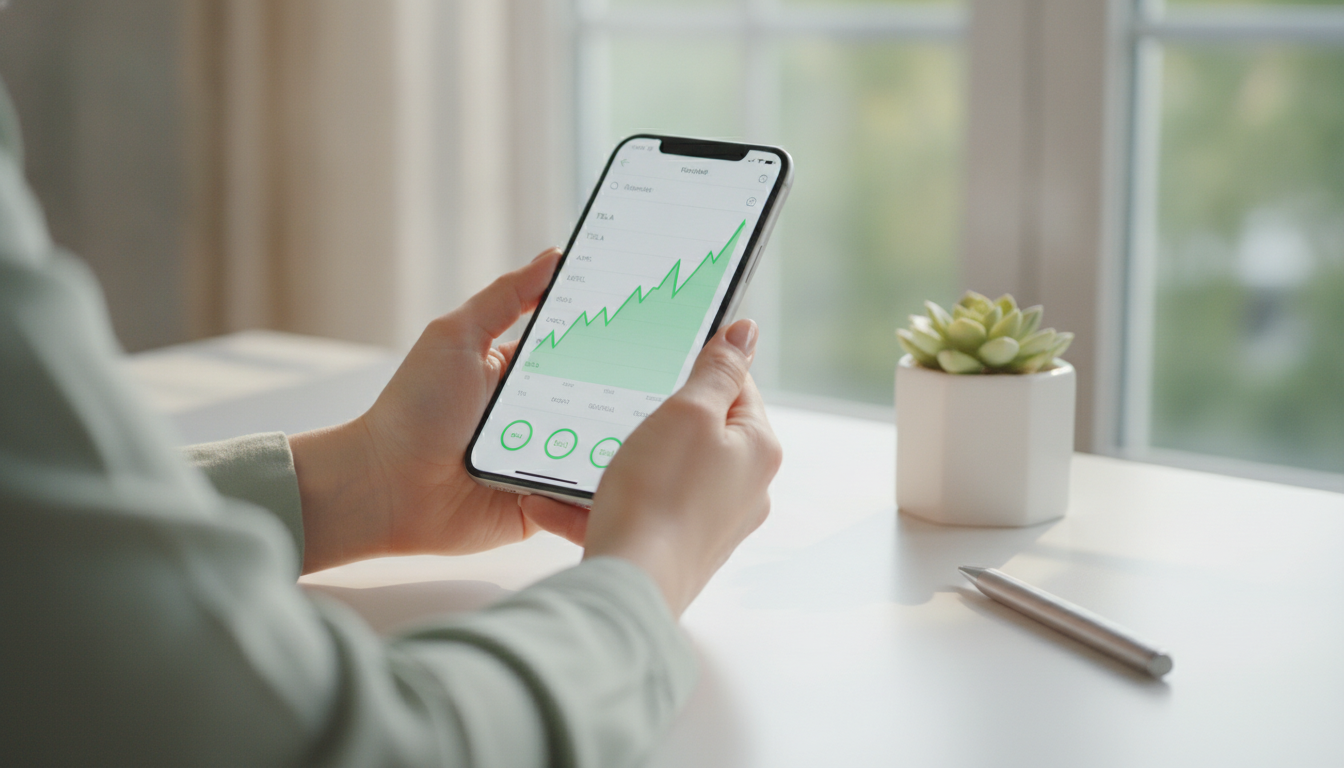
Opening the account itself was surprisingly quick. I had expected hours of paperwork, but after 15 minutes I was done. Here's how I went about it:
- Downloaded the app and entered my personal details: name, address, date of birth, tax ID
- Verified my identity by video call (Video-Ident): I held my ID up to the camera and an employee checked my identity
- Linked the bank account I would later transfer money from
- After two business days I got confirmation that my account was activated
One of the most common beginner mistakes is letting all the technical terms intimidate you. I made myself a simple rule: if I don't understand something, I google it right away. Terms like ISIN, WKN, or order types sounded complicated but were explained in five minutes.
What I got wrong when opening a brokerage account as a beginner
At first I had no clear strategy. I knew I wanted to invest, but not in what exactly. That led me to spend too much time at first searching for the perfect first stock. If I had defined beforehand whether I wanted to invest in ETFs, individual stocks, or both, the start would have been more relaxed.
A second mistake: I hesitated too long because I thought I needed more money. In reality, I could have started a savings plan with just 25 euros (about $27) a month. That would have saved me weeks of dithering.
Buying my first stock: an unspectacular but important moment
After opening the account came the most exciting part: placing the first order. I had decided on an ETF, specifically the MSCI World, because it's broadly diversified and I didn't want to risk taking losses right away with an individual stock.
I transferred 100 euros (about $110) to my account, waited a day for the money to arrive, and then bought my first ETF share. The order took less than a minute. I clicked "Buy," confirmed the amount, and the order was executed. Done. No drama, no complications.
What I had underestimated: the feeling afterward. For the first time I had invested money that was working for me. It wasn't much, but it was a start. Similar to investing with little money, it wasn't about instant returns, but about finally getting started.
Comparing brokerage accounts: what I'd do differently today
With some distance, I'd approach opening a brokerage account as a beginner differently in a few ways. I'd set up a savings plan from the start instead of buying manually. That automates the process, and I don't have to think about it every time.
I'd also decide earlier on a fixed monthly amount to pay into the account. For me it was 50 euros (about $55) at first, and today it's 200 euros (about $220). The amount doesn't matter as long as it comes in regularly. According to an analysis by the German Share Institute (Deutsches Aktieninstitut), the average savings plan contribution in Germany in 2023 was 175 euros a month (about $190), a realistic figure for many beginners.
Stock market for beginners: what I learned in the first months

The first weeks with my account were an emotional roller coaster. I constantly checked how my investment was doing. Sometimes I was up 2 euros, sometimes down 3 euros. Totally irrational, but typical for the beginning.
What helped me: I made friends with the idea of long-term investing. Warren Buffett once said that the stock market is a machine that transfers money from the impatient to the patient. I wanted to be one of the patient ones.
I also learned that a brokerage account is not gambling. It's not about getting rich quick, but about building wealth over the years. That realization took the pressure off having to get everything right immediately.
The most important lessons from my first year
After a year with my account, I can say that three things have proven especially valuable. First: just starting is more important than starting perfectly. I could have kept researching for months, but the money I would have invested during that time would already have been working.
Second: diversification isn't a buzzword, it makes sense. By now I have not just one ETF but also two individual stocks from different sectors. That spreads the risk.
Third: take the emotions out of investing. I've learned not to check my account every day. Once a month is perfectly enough. That reduces stress and prevents impulsive decisions.
FAQ: your questions about opening a brokerage account as a beginner
How do I open my first brokerage account as a beginner?
You choose a broker, download the app or go to the website, enter your details, and verify your identity by video call. After one to two business days your account is activated and you can transfer money and invest.
Which brokerage account is best for beginners with no experience?
Brokers like Trade Republic, Scalable Capital, or ING are well suited to getting started because they offer low fees, intuitive apps, and free savings plans. The choice depends on your personal preferences.
How much money do I need to buy my first stock?
You can start investing in savings plans from as little as 1 euro. For buying individual stocks, you should plan on at least 25 to 50 euros to make sensible use of the fees. Starting capital of 100 euros is a good benchmark.
What's the difference between a brokerage account and a checking account?
A checking account is for everyday payments, while a brokerage account is an account for securities such as stocks or ETFs. You buy shares through the brokerage account and hold them there. You transfer the money for the purchase from your checking account to the brokerage account's settlement account.
Can I close a brokerage account again if I no longer want it?
Yes, you can close your account at any time, free of charge. You simply sell your securities, transfer the money back to your checking account, and request the closure from your broker. There are no notice periods.
My conclusion: opening a brokerage account as a beginner is no rocket science
Looking back, the biggest hurdle wasn't opening the account itself but my own insecurity. I thought I needed years of stock market experience to get started. Not true. I needed 15 minutes, an ID, and the courage to click "Open now."
Today, a year later, I've built a small portfolio that grows slowly but steadily. I haven't become a stock market expert, but I've taken the first step. And that's exactly what it's about: start, learn, stick with it.
If you're thinking about opening a brokerage account, just do it. Not tomorrow, not next month, today. Your future self will thank you. Opening a brokerage account as a beginner is the first step toward more financial freedom. And you can take it right now.