Breathing Techniques for Inner Calm: My Personal Journey
Reading time: 11 minutes
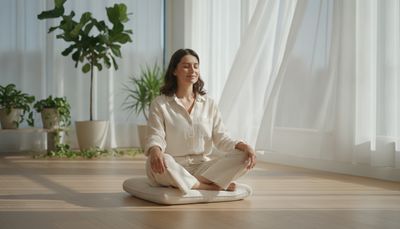
Three years ago I was sitting in my then-employer's office in Midtown Manhattan, feeling my heart race. Deadlines, meetings, endless emails. I couldn't think straight anymore. A coworker asked me whether I'd ever tried mindful breathing. I thought: "Breathing? I do that all day long." But she meant something different. Today I know that breathing techniques for inner calm aren't just a trend, they changed my life. I left the 9-to-5 job behind and found what I was looking for: real peace of mind.
Inner calm isn't a luxury you treat yourself to now and then. It's the foundation for everything. If you're constantly stressed, you make bad decisions, you can't wind down, and you lose sight of what really matters. It took me a long time to understand that. But when I started experimenting with simple everyday breathing techniques, my whole mindset changed.
Why mindful breathing works
Most people breathe shallowly and unconsciously. According to a 2023 study by Techniker Krankenkasse, a large German health insurer, 64 percent of Germans suffer from stress, and many don't even realize that their breathing is directly linked to it. When you're stressed, you breathe faster and more shallowly. That signals danger to your body. Your sympathetic nervous system kicks in, cortisol is released, and you're in fight-or-flight mode. Breathing exercises promote calm because they activate the parasympathetic nervous system, the part of your nervous system responsible for rest and recovery.
The first time I practiced consciously was in Central Park. I sat on a bench by the water and focused on nothing but my breath. Breathe in through the nose, four seconds. Hold, four seconds. Breathe out through the mouth, six seconds. After ten minutes I felt as if I'd slept for an hour. No app, no coach, just me and my breath.
How breathing techniques create more inner calm
There are different methods, and not every one suits everybody. I tried several until I found my favorites. The effect is scientifically proven. A 2022 study by Ludwig Maximilian University of Munich showed that just five minutes of controlled breathing a day can lower cortisol levels by up to 23 percent. That's not woo-woo stuff, that's biology.
The 4-7-8 method by Dr. Andrew Weil
This technique helped me the most in the first few weeks. Dr. Andrew Weil, an American physician, developed it based on ancient yoga practices. You breathe in through your nose for four seconds, hold your breath for seven seconds, and breathe out through your mouth for eight seconds. The ratio is crucial, because the longer exhale activates the parasympathetic nervous system. I did this every night before falling asleep, four rounds. After two weeks I fell asleep faster and woke up more rested.
Box breathing for acute stress
Box breathing, also called square breathing, is even used by Navy SEALs to stay calm in extreme situations. You breathe in for four seconds, hold for four seconds, breathe out for four seconds, and hold again for four seconds. You repeat the whole thing several times. I use this relaxation technique when I'm nervous before important conversations or when I feel like I'm losing control. Once I was sitting in a café near Bryant Park, shortly before an important date, and felt my pulse go up. Three rounds of box breathing, and I was clear-headed again.
Belly breathing instead of chest breathing
Many people only breathe into their chest, not their belly. But the real power lies in belly breathing. Your diaphragm moves fully, you take in more oxygen, and your body relaxes. I put my hand on my belly and feel whether it rises as I inhale. At first I had to practice this consciously; today I do it automatically. This simple change helped me find my inner balance without having to meditate for hours.
Which breathing exercises help with restlessness in everyday life
Restlessness isn't all the same. Sometimes it's vague nervousness, sometimes outright panic. I've learned to use different techniques for different situations. Finding more calm through breathing exercises doesn't mean you'll never be stressed again. It means you have a tool to deal with it.
When I wake up in the morning and already have the to-do list in my head, I use alternate nostril breathing, also known as Nadi Shodhana. You hold one nostril closed, breathe in through the other, switch, and breathe out. That sounds complicated, but after two tries it's totally easy. A 2023 study by the University Medical Center Hamburg-Eppendorf in Germany showed that this technique improves heart rate variability, an important indicator of stress resilience. I do this for five minutes in the morning, often still in bed.
In moments when I feel like the world is spinning too fast, I rely on extended exhalation. Simply exhale for longer than you inhale, in a ratio of 1:2. It calms you down immediately. I once did this on the subway when it was stuck forever between stations and I had an appointment. Three minutes of mindful breathing, and the inner panic was gone.
My routine: learning mindful breathing for mental balance
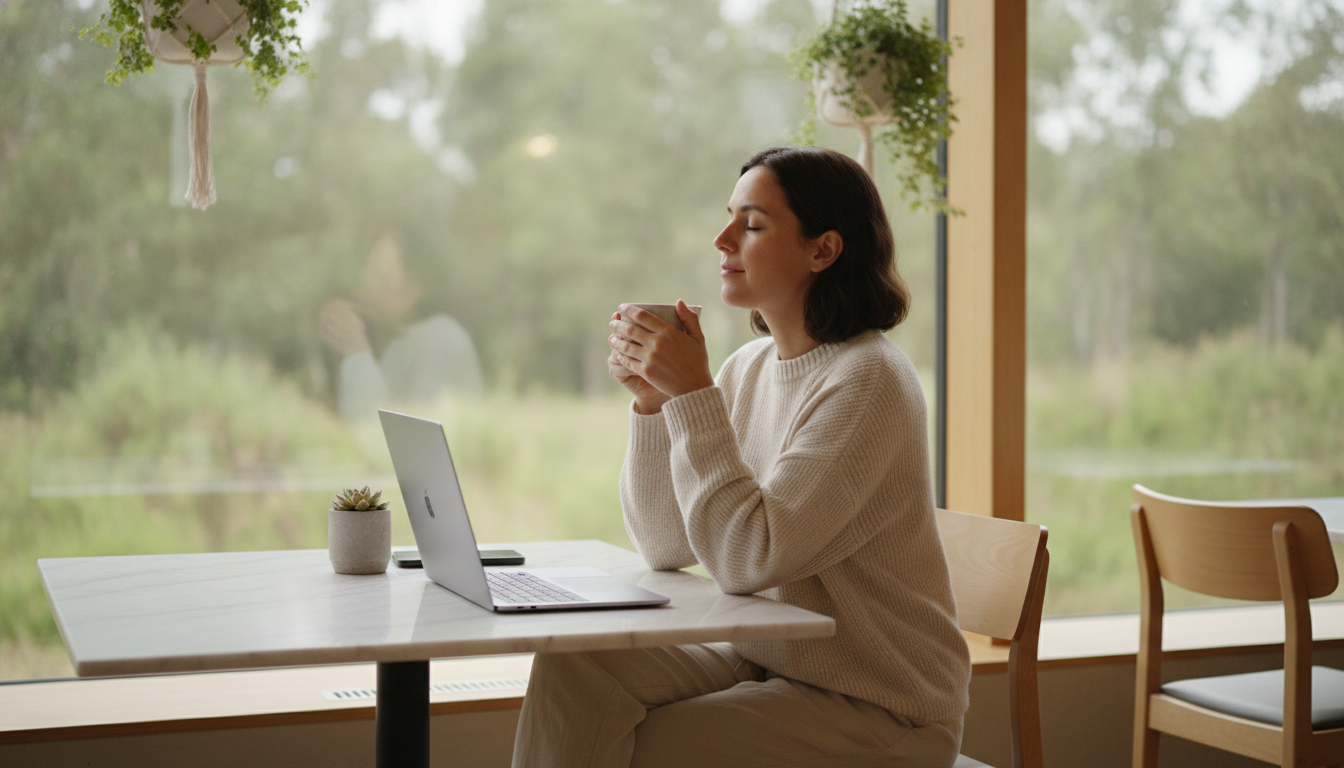
I've built myself a fixed routine that works. No hour of meditation, no elaborate ritual. Just three moments a day when I breathe consciously:
- In the morning after waking up: 5 minutes of alternate nostril breathing in bed
- At midday before lunch: 3 minutes of box breathing, no matter where I am
- In the evening before sleep: 4 rounds of 4-7-8 breathing
These 12 to 15 minutes a day have changed more than any coaching or therapy. I'm calmer, I make better decisions, and I no longer let little things throw me off track. It has also improved my relationships. When you're constantly stressed, you're not pleasant company. I've noticed that I go into conversations more relaxed since I've been practicing regularly. That helped me set boundaries and say no without turning aggressive.
Finding more calm with breathing exercises
The biggest mistake many people make: they expect instant results. Breathing techniques aren't a magic trick. It takes a few weeks for your nervous system to get used to them. I felt the first real difference after three weeks. Before that it was more of a placebo effect, nice, but not life-changing. Then, after about 20 days of daily practice, I noticed: I no longer blew up at every problem. I had a buffer between stimulus and reaction.
According to a 2023 survey by the Robert Koch Institute, Germany's public health institute, 32 percent of adults in Germany have problems with chronic stress. Many reach for medication or alcohol. I chose the other path. No pills, no wine in the evening to wind down. Just breath. It sounds mundane, but it's effective.
One important point: breathing techniques don't replace therapy if you have serious mental health problems. But they're a damn good tool for everyday life. I've also noticed that I need less coffee because I'm no longer constantly tired. My sleep is deeper, my concentration better. That helped me work more productively without burning out. Back when I was still in a traditional job, this would probably have helped me relieve the stress at work before it was too late.
Why lifestyle dating and inner calm go together
I'll be honest: my path to more composure also has to do with the fact that I got to know new perspectives. Through lifestyle dating on platforms like MySugardaddy, I met people who showed me there's more out there than the 9-to-5 grind. I learned that financial independence and inner calm go hand in hand. When you constantly have money worries, it's hard to calm down. But when you have options, you relax automatically.
I remember a conversation in a hotel bar in Chicago. My date told me how he meditates daily and makes his business decisions from a calm state. That inspired me to experiment more myself. I noticed that successful people have often built some form of breathwork or meditation into their daily lives. That's no coincidence.
Using simple breathing techniques in everyday life
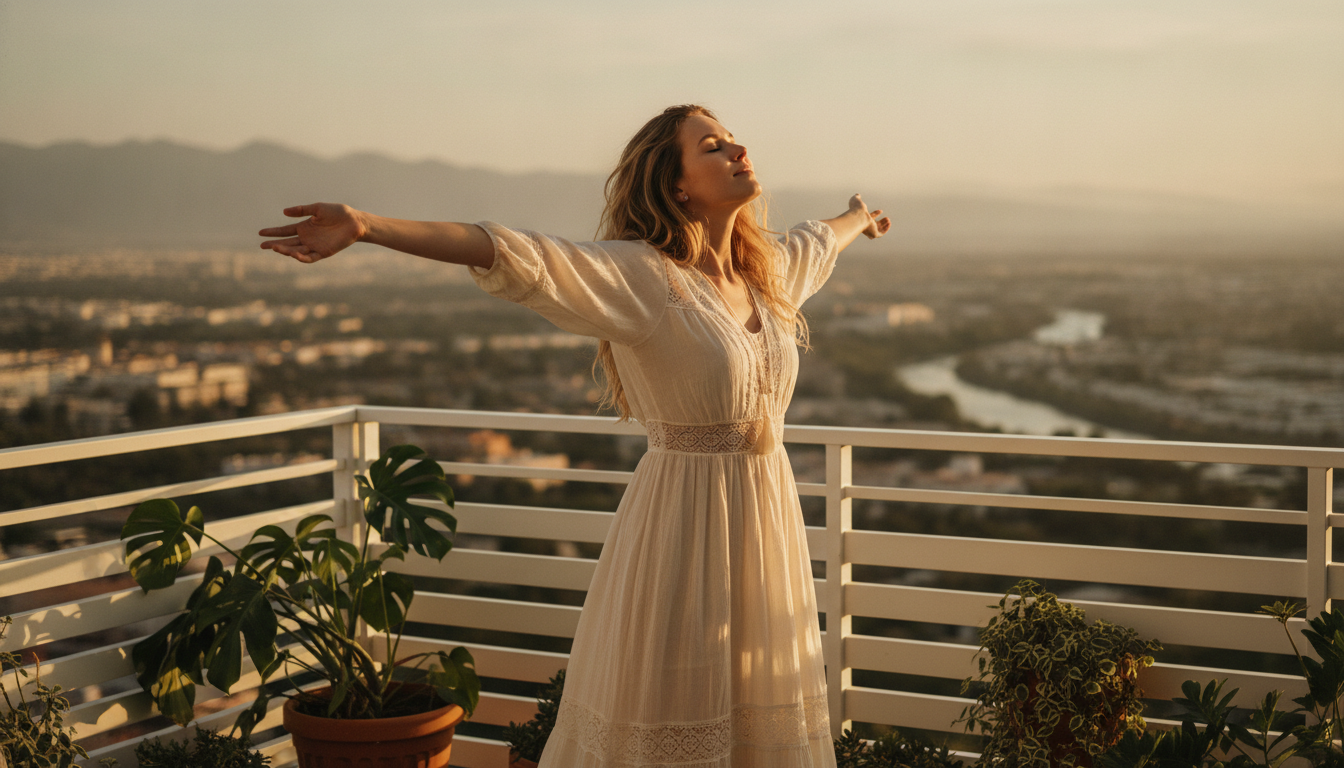
You don't need special equipment, a quiet room, or an app. You can breathe anywhere. On the train, in a café, on a walk, even in the office restroom. I started breathing consciously in waiting situations instead of staring at my phone. While waiting for the bus at the stop, standing in line at the supermarket, everywhere. That has two benefits: you practice regularly, and you turn annoying moments into productive ones.
A tip I got from a yoga teacher in the West Village: connect your breathing with an everyday activity. For example, I always breathe consciously when I'm making coffee. I use the two minutes the machine needs for box breathing. That way it becomes a habit without my having to set aside extra time.
If you want to start with breathing exercises, start small. Not 20 minutes a day right away, you won't manage that. Start with three minutes, in the morning or evening. Set a timer on your phone. After a week, increase to five minutes. After a month you're at ten. That's realistic and it works. I made the mistake of wanting too much at the start, and then I was frustrated when I couldn't stick with it. Small steps beat big resolutions.
How inner calm has affected my life
Since I've been practicing breathing techniques regularly, my life has improved in many areas. I'm not as quick to get irritated, I sleep better, and I make clearer decisions. I've also noticed that I'm less afraid of change. When I decided to quit my traditional job, I was surprisingly calm. In the past that would have sent me into a panic. But I had the feeling: I can do this, I have the inner balance to see it through.
A concrete example: last year I had an important conversation about a financial investment. $5,000, a lot of money for me at the time. I was nervous and didn't want to make the wrong decision. Before the meeting, I did the 4-7-8 method for ten minutes. I went into the conversation with a clear head, asked the right questions, and in the end made a deliberate decision. The investment paid off. I'm convinced that without the breathing exercise I would have decided impulsively, out of insecurity.
My social life has changed, too. I'm more present in conversations and listen better because I'm no longer running at full throttle inside. That helped me build a real network based on trust and not just superficiality. People can feel when you're truly there, and not just physically present.
FAQ: Common questions about breathing techniques for inner calm
How often should I do breathing exercises to feel an effect?
At least five minutes a day. After two to three weeks of regular practice, you'll notice a clear change. Your nervous system needs time to adjust. Practicing once brings short-term relaxation, but the long-term effects come only through consistency. After three weeks I noticed that I reacted to stress more calmly, and after six weeks it had become part of my personality.
Which breathing technique is best for beginners?
The 4-7-8 method is ideal for getting started. It's easy to learn, has a clear structure, and calms you down quickly. Alternatively, you can start with mindful belly breathing, where you simply make sure your belly rises as you inhale. Both techniques require no prior knowledge and can be used right away, wherever you are.
Can I also use breathing techniques for panic attacks?
Yes, but with limits. Breathing exercises can ease acute panic, but they don't replace professional treatment. Box breathing or extended exhalation help calm the nervous system. If you regularly have panic attacks, seek therapeutic support. Breathing techniques are a complementary tool, not a substitute for therapy. I use them for vague restlessness, not for clinical anxiety disorders.
How long does a breathing exercise take in everyday life?
Between three and ten minutes, depending on the technique and your schedule. For acute stress, two minutes of box breathing is often enough. For deeper relaxation, plan for five to ten minutes. I do five minutes of alternate nostril breathing in the morning, three minutes of box breathing at midday, and four rounds of 4-7-8 breathing in the evening, which takes about three minutes. A total of 11 minutes a day that completely changed my life.
Is there scientific evidence for the effect of breathing techniques?
Yes, several studies back up the effect. Ludwig Maximilian University of Munich showed in 2022 that five minutes of controlled breathing can lower cortisol levels by up to 23 percent. The University Medical Center Hamburg-Eppendorf demonstrated in 2023 that alternate nostril breathing improves heart rate variability, which is a sign of better stress resilience. The American Psychological Association also confirms that mindful breathing activates the parasympathetic nervous system and thereby promotes relaxation.
Conclusion: inner calm isn't an accident, it's a decision
Breathing techniques for inner calm have changed my life. Not overnight, but lastingly. I'm no longer the stressed-out wreck I was three years ago. I've learned that I can actively influence my nervous system, that I don't have to be a victim of my circumstances. Mindful breathing is the simplest and most powerful tool I know. No cost, no equipment, just you and your breath.
If you feel like you're constantly wired, give it a try. Three minutes a day, that's all you need to start. Sit down, close your eyes, and breathe. It will feel strange, maybe even boring. But stick with it. After two weeks you'll notice something shifting. You'll become calmer, clearer, more present. And that's the first step toward a life you truly shape yourself instead of just drifting. Start today, not tomorrow. Your future self will thank you.